
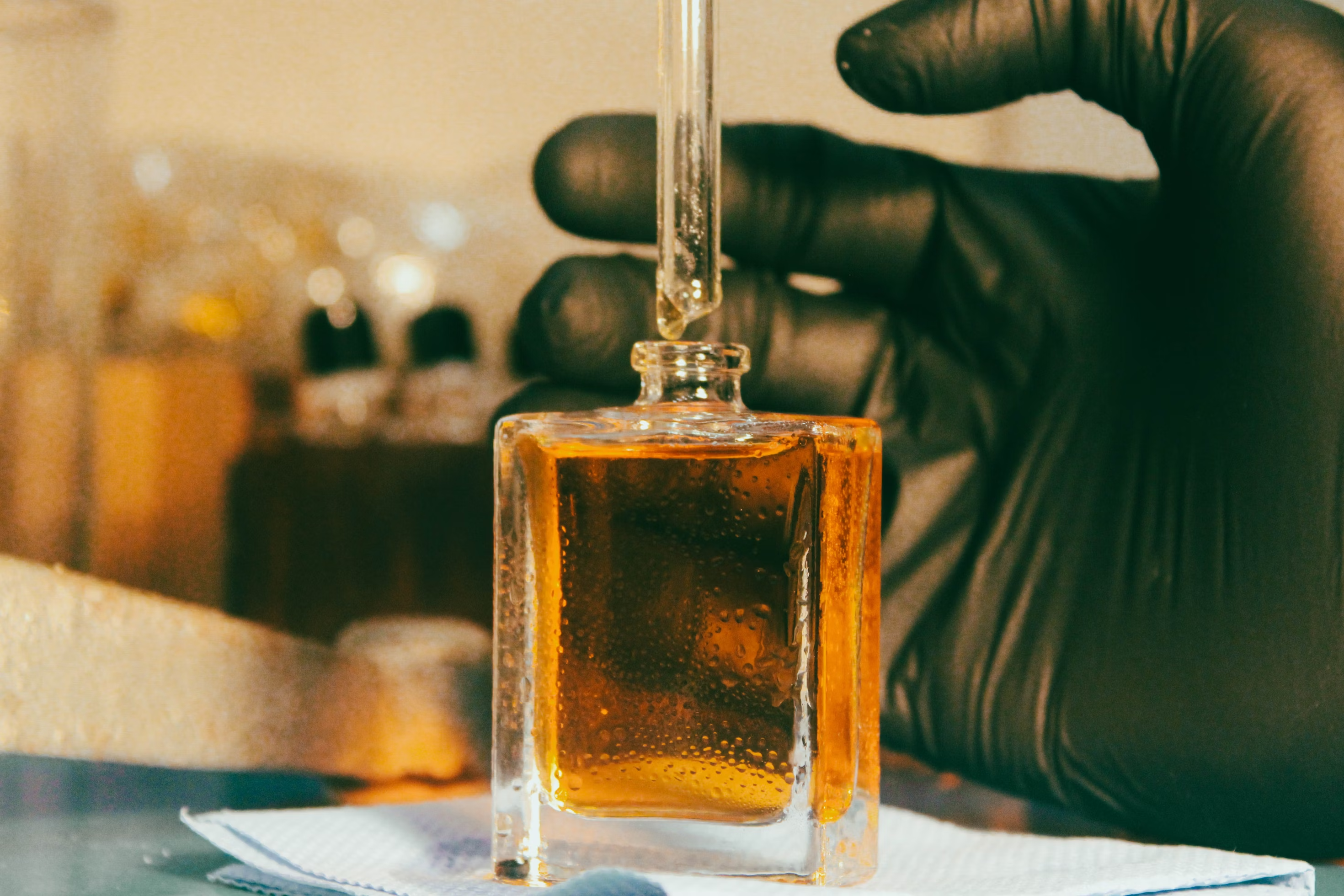
How AI Is Revolutionizing Perfume Development and Speeding Up Time-to-Market
The fragrance industry is undergoing a tech-driven transformation. Traditionally, creating a new perfume can take a year or more from initial concept to final formula (How Long Does It Take To Create A Fragrance? • Scent Lodge Edit) – even longer if novel ingredients are involved. This lengthy process has often been slow, uncertain, and out of reach for many brands (New AI-powered fragrance house launches with 'groundbreaking' approach to scent creation - TheIndustry.beauty). Today, artificial intelligence (AI) is dramatically accelerating perfume development while also expanding creativity. From formulation and ingredient discovery to trend prediction, AI is helping brands launch fragrances faster than ever without compromising quality.
Smarter Formulation with AI Tools
AI has made its way into the perfume laboratory, giving perfumers “power tools” to work more efficiently. Instead of relying solely on trial and error, fragrance creators can use AI-driven formulation software to generate and refine perfume formulas rapidly. For example, industry leader Givaudan has introduced an AI-powered system called Carto that can almost instantly create a perfume from AI-generated research, allowing quick experimentation with new formulas (AI for fragrance creation and innovation). Likewise, Procter & Gamble’s fragrance team partnered with an AI tool (Moodify White) to enhance product design and speed to market (AI for fragrance creation and innovation ). These tools analyze vast datasets of fragrance combinations and predict which blends of notes will work well together, sparing perfumers countless iterations.
By simulating how a scent will smell and evolve, AI formulation platforms help perfumers fine-tune mixtures in hours rather than weeks. This not only shortens development cycles, but also frees up human creators to focus on the art and storytelling of scent instead of tedious mix-and-sniff work. As Osmo founder Alex Wiltschko puts it, olfactory AI can “dramatically enhance creativity,” letting creators spend less time on manual toil and more on optimizing products to meet consumer demand. For examples, Osmo was able to capture the scent of a real-life plum and bottle it to be used in a number of different applications**.** In practice, a perfumer can input a concept – even abstract inspiration from text or images – and the AI tool will suggest a precise formula, complete with proportions of each ingredient (New AI-powered fragrance house launches with 'groundbreaking' approach to scent creation - TheIndustry.beauty). Such smart assistance makes the formulation process both faster and more precise.
Discovering New Ingredients in a Fraction of the Time
Another way AI is revolutionizing perfume development is through the discovery of new scent molecules. In the past, finding a novel fragrance ingredient (known in the industry as a “captive” molecule) could take 7–10 years of R&D (Osmo). This meant innovation was slow and expensive, limiting how distinctive a brand’s scent could be. AI has upended this paradigm. By using machine learning to predict molecular properties and sift through chemical possibilities, companies like Osmo can now create new captive ingredients four times faster than traditional methods (Osmo).
Speed isn’t the only benefit. AI-designed fragrance molecules can be tailored to meet specific goals such as sustainability, safety, or intensity from the start. Osmo, for instance, allows brands to predict and synthesize molecules that have never been smelled before, solving problems that existing materials can’t (like toxicity or allergen risks) (New AI-powered fragrance house launches with 'groundbreaking' approach to scent creation - TheIndustry.beauty). Every new AI-developed ingredient is rigorously tested for safety and can even be engineered to exclude potential irritants before it’s ever made (Osmo). This means perfumers get a broader, cleaner palette of ingredients to work with, and brands can have proprietary scents that set them apart. Importantly, tapping AI for ingredient innovation ensures that creating the building blocks of perfumes no longer bottlenecks the launch timeline.
Data-Driven Trends and Consumer Insights
AI is also helping fragrance brands anticipate trends and consumer preferences with unprecedented accuracy. Rather than guessing which floral note or gourmand twist might be the next big hit, brands can leverage AI to analyze real-world data – from social media chatter to search trends and even mood analytics – to inform their fragrance briefs. This kind of predictive market intelligence lets creators design scents that are likely to resonate with target consumers. In fact, analyzing social media commentary about fragrance notes and packaging has already been used to shape new perfumes via AI (AI for fragrance creation and innovation ). AI can spot emerging patterns (say, a rise in popularity of a certain ingredient like fig or oud) and suggest formulations aligned with that demand.
By integrating consumer data early on, AI helps ensure that a new perfume hits the mark. Brands can virtually test a fragrance concept with AI-simulated focus groups or feedback loops, refining the product even before physical sampling. These pre-launch simulations allow companies to tweak and perfect a scent in weeks instead of conducting months of market testing. The result is not only a fragrance more likely to succeed, but also a significantly shorter path from idea to shelf, since less time is lost on missteps. As one beauty tech analyst noted, AI tools are enabling “faster innovation in fragrance development” by using data to drive efficiency and creativity in what has traditionally been a subjective process (AI for fragrance creation and innovation ).
Faster Go-to-Market, Without Compromise
All these AI capabilities – smarter formulation, rapid ingredient innovation, and trend prediction – converge to streamline the journey from concept to launch. By reducing manual iterations and providing clear direction, AI can compress development timelines from years to months. Tasks that once had to happen sequentially can now run in parallel. For example, while an AI algorithm suggests optimal fragrance combinations, another can be ensuring regulatory compliance (checking allergen rules or stability), and yet another can be forecasting consumer reception – all at the same time. The outcome is faster development cycles that reduce time-to-market without compromising quality (New AI-powered fragrance house launches with 'groundbreaking' approach to scent creation - TheIndustry.beauty). A process that might have taken 18 months might be achieved in a fraction of that time, which is game-changing for brands eager to respond quickly to trends or seasonal opportunities.
Crucially, speed gains do not mean cutting corners. On the contrary, AI’s precision often improves quality and safety. Formulas are optimized to perform better and meet clean beauty standards from the outset. Perfumers and product developers can iterate countless variations virtually, landing on a winning formula that already accounts for stability, safety, and consumer appeal – before the first physical sample is even made. This agile development means brands can be bolder in innovation because the cost (in time and resources) of exploration is so much lower. In today’s crowded market, being able to launch the right fragrance at the right time is a huge competitive edge. AI is enabling brands to do exactly that, combining speed with insight to ensure each new launch has the best chance of success (Osmo).
Osmo: Leading the AI Fragrance Revolution
At the forefront of this AI-driven shift is Osmo, whose fragrance house launched in March 2025, blending cutting-edge AI (Olfactory Intelligence) with perfume artistry and market savvy. Its platform brings together exclusive new ingredients, advanced AI formulation tools, and real-world market intelligence, all in one seamless creation process (New AI-powered fragrance house launches with 'groundbreaking' approach to scent creation - TheIndustry.beauty). The goal is simple yet ambitious: help brands and creators go from idea to market faster and more creatively than ever before.
Osmo’s approach exemplifies how AI can amplify human creativity rather than replace it. Perfumers and brands working with Osmo still craft the vision and emotional story behind a scent – but now they have a powerful AI partner to execute that vision. Using Osmo's tools, a brand can input a concept (imagine capturing the vibe of a “midnight rainforest” or an “urban garden party”) and quickly get back a data-driven fragrance blueprint to match. The olfactory intelligence system translates abstract ideas and even imagery into olfactive maps, suggesting the notes and ingredient combinations that will realize that vision (Osmo). Because Osmo's AI has been trained on extensive fragrance data, it can recommend unexpected yet harmonious notes, sparking novel ideas that a human perfumer might not think of so quickly.
Moreover, Osmo's in-house palette includes those AI-discovered captive molecules like Glossine, Fractaline, and Quasarine, which give brands access to fresh scents unavailable anywhere else (Osmo). These proprietary ingredients can solve formulation challenges (for instance, achieving a certain long-lasting effect or a unique floral tone) and meet modern demands for sustainability and safety. By leveraging such innovations, Osmo empowers even brands new to fragrance to create high-quality, one-of-a-kind scents that stand out. Early collaborations underscore this potential: for example, the Museum of Pop Culture in Seattle worked with Osmo to develop a signature scent for their guests – a creative opportunity that became feasible thanks to AI’s speed and flexibility in capturing pop culture in a bottle (Osmo).
In essence, Osmo is building the future of fragrance development. It provides a welcoming gateway for established fragrance houses and newcomers alike to harness AI’s benefits. Whether you’re an existing perfume brand looking to accelerate innovation or a lifestyle brand exploring a fragrance line for the first time, Osmo's AI-powered platform offers an intuitive, data-informed way to create perfumes that resonate with consumers. It’s a blend of science and artistry that can cut months (or even years) off the development timeline while yielding truly extraordinary products that hit the mark with consumers and regulators (New AI-powered fragrance house launches with 'groundbreaking' approach to scent creation - TheIndustry.beauty).
Ready to revolutionize your fragrance development process? Now is the time to embrace AI as your co-creator. Brands big and small can leap forward with the help of olfactory intelligence – speeding up go-to-market and unlocking new levels of creativity. Osmo is here to help you craft your next iconic scent, faster than you ever thought possible.
Contact us at hello@osmo.ai to discover how we can co-create a fragrance that captures your brand’s unique spirit.